07/06/2026
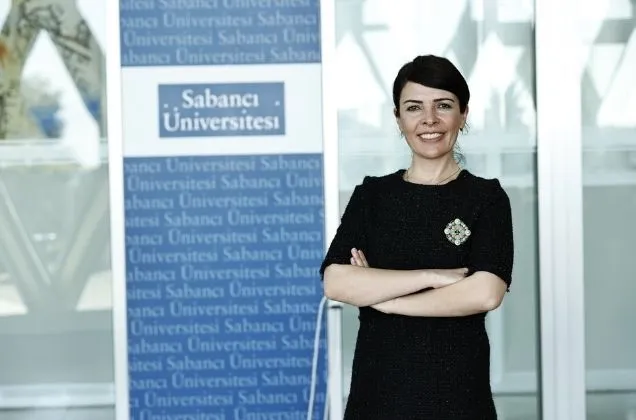
Prof. Ayşe Kıvılcım (spark in English) Coşkun, a 2003 graduate of Sabancı University, is recognized as a world-renowned authority on energy consumption and energy efficiency in computer systems. Seeking solutions to one of today's most critical problems – the difficulty electricity grids face in meeting the high energy demands of artificial intelligence data centers – Prof. Coşkun achieved great success with Emerald AI, her company. Emerald AI, which entered the TIME 100 Most Influential Companies of 2026 list in April, has recently strengthened its position by forming a strategic partnership with the artificial intelligence giant NVIDIA.

“I am sending you out as sparks; you must return as flames.” This is how Mustafa Kemal Atatürk addressed the young people sent abroad for education in 1924. These scientists, who made significant contributions to the foundation of the Republic, returned to their country like a flame, playing a critical role in the success of the republican revolutions.
Nearly a century later, our young people who went abroad as a "spark" are now recognized as world-class authorities, spreading their light to the world like a "flame" by producing solutions to global problems.
These developments are concrete evidence that prestigious Turkish universities like Sabancı University have become world-class educational institutions within a century. Prof. Coşkun, who completed her doctoral studies abroad after receiving her undergraduate degree from Sabancı University's Microelectronics Engineering Program in 2003, is the Chief Scientist at Emerald AI, which enables data centers to flexibly coordinate their power consumption.
We asked Prof. Coşkun about what Sabancı University contributed to her higher education, the founding story of Emerald AI, and the concept of flexible energy use:
Reyhan Oksay - After graduating from Sabancı University's Microelectronics Engineering Program in 2003, you completed your PhD at the University of California, San Diego. The idea that AI data centers should work more seamlessly with the power grid probably didn't just appear out of nowhere. Looking back, your work seems highly relevant to today's energy challenges created by AI. How did your interests in energy efficiency and computer systems evolve into this line of research?. Did you have this vision during your undergraduate studies at Sabancı University? How did such a prediction develop at the beginning of your career?
Prof. Coşkun - While doing my PhD, I started working on the energy consumption and energy efficiency of computer systems. Our basic questions were: How can computer systems consume less energy, how can more useful work be done with the same energy, how can the heating of systems be reduced? During this process, we also worked on intelligent analysis and automatic control methods; that is, we focused on how computer systems could manage themselves more efficiently by analyzing the data coming from the systems.
My education at Sabancı was based on microelectronics engineering, and I also minored in physics. Later, I earned a PhD in computer engineering at the University of California, San Diego. Trends in technology are constantly changing; for example, the rapid rise of artificial intelligence in recent years. But having a strong foundation in fundamental knowledge and being able to think in an interdisciplinary way—for example, understanding “energy” and relating it to software and systems—actually stems from my years of education at Sabancı.
At the beginning of my career, it was certainly impossible to foresee where artificial intelligence is today. But seeing problems at the intersection of different technical fields, considering combining different methods for solutions, and re-examining seemingly solved issues with new perspectives, have been crucial on my path to my current career.
You are currently considered a global authority on energy efficiency in data centers. Emerald AI, "which you are leading as the Chief Scientist, is built on the foundations of your groundbreaking research. Did you conduct this process with your group at the Boston University Center for Information and Systems Engineering?
About 13-14 years ago, during my early years at Boston University, I began working in this field with my research group. My initial focus was on making data centers more energy-efficient: how can we do the same job with less energy, and how can we manage systems more intelligently?
Over time, we realized that data centers aren't just energy-consuming structures; with the right software and control systems, they can be large, "flexible" electrical loads that can work more seamlessly with the power grid. This idea matured through years of academic research, work with my students and other academics in my research group, publications, prototypes, and experiments in real systems. Emerald AI is built upon this long research journey and scientific work. So, in a sense, it's the real-world implementation of ideas from the lab.
Before joining Boston University, you worked at Sun Microsystems (Oracle) in San Diego. Did you work on energy use flexibility while you were there?
Yes, absolutely. At Sun Microsystems, I was on a team working on how we could use the data that computer systems generate during operation (performance, power consumption, temperature, etc.) more intelligently. Our general question was: How can chips and servers work more efficiently and be better managed by leveraging this data?
In this context, we worked on energy efficiency, reducing heat generation, and distributing workloads more evenly across chips in a computer system; We wrote articles and obtained patents. My experience at Sun was very valuable. In addition to technical knowledge, I had the opportunity to learn very early on how the industry views a problem and how research can be combined with real-world applications.
With this approach, you argue that AI data centers don't have to be just structures that consume electricity, but can also become active infrastructures that balance and modernize the electricity grid and work in harmony with renewable energy. What difficulties did you encounter in bringing this idea to life? What challenges did you face in convincing people of this idea, finding funding, and securing technical support?
Yes, data centers consume a very large amount of electricity. Therefore, it is important not only for them to become more efficient, but also to work in harmony with the electricity grid. That is, the data center can reduce its electricity consumption when the grid needs it, and can perform more operations when there is an abundance of energy.
The idea behind this is that computer systems have more flexibility than many other energy-consuming structures. Because not every operation we perform is equally urgent; Some processes might be temporarily delayed, slightly slowed down, or moved to another location, and the user might not even notice.
Of course, bringing this idea to life wasn't easy. During the research process, we changed the way we defined the problem several times. In the end, we saw that it was more appropriate to approach the issue this way: guaranteeing the performance of users' work and applications in the data center, that is, ensuring they run fast enough, while also being compatible with thepower grid. We reached this point through trial and error, feedback, and rethinking. Research often doesn't progress linearly; it requires repeated thinking and improving the approach.
There were also difficulties in securing funding and getting this idea accepted. When you come up with a new and unconventional idea, you might get reactions like "this won't work in practice" or "it can't be implemented in real life." Some of these criticisms are very valuable and strengthen the work. Some, however, may not immediately see the vision. But good ideas usually show their effect over time.
While providing this flexibility, are you also using artificial intelligence to enable some AI workloads to be temporarily paused, slowed down, postponed, or transferred to other data centers? In short, are you saying that "AI can solve the energy problem created by AI"?
AI has a very strong capacity to capture patterns from very complex data and make good decisions. Flexibility in data centers is also a very complex problem. Different jobs are running simultaneously on the chips, there are user expectations, signals from the power grid are changing, and data centers have multi-layered software systems within themselves.
We use artificial intelligence to understand such a complex system and make the most accurate decisions. In a sense, we can say that we are using the decision-making power of AI to solve the energy problem created by AI.
In one of your TED talks, you suggest that data centers can function like a "virtual battery." What do you mean by that?
A battery can kick in and provide energy when the power grid decreases, and then it can recharge again. But it's not easy to solve this problem with just physical batteries; because large batteries are costly and also have some significant technical and environmental limitations.
Data centers, on the other hand, can perform a similar function by reducing or increasing their consumption. That is, by drawing less energy when needed and then returning to normal operation when the need has passed, they can act like a "virtual battery." That's why I use this analogy.
How do you operate computer systems while complying with the limitations of the power grid and fulfilling user performance agreements?
User performance is the most important constraint for a data center. Because if the user cannot process at the desired speed, that system may become meaningless.
Therefore, when managing power and electricity, we first determine which tasks and applications are flexible. We slow down or postpone tasks that are not urgent or can tolerate short-term slowdowns in a controlled manner. While doing this, we fulfill the performance agreements given to the user.
How can Emerald AI’s approach reconcile AI with renewable energy?
Renewable energy sources, such as solar and wind, do not consistently produce the same amount of energy; sometimes they produce a lot, sometimes a little. This fluctuation makes the supply-demand balancing process of the electricity grid more challenging.
Large and flexible consumers, such as data centers, can absorb some of this fluctuation. When energy is abundant, they can perform more operations, and when energy is scarce, for example, during hot hours when other consumers' energy demand increases, air conditioners are used extensively, or when there are power plant failures, they can reduce their consumption. This can facilitate the integration of renewable energy into the grid.
Can the Emerald AI Conductor platform accelerate the widespread adoption of AI?
One of the biggest problems faced by data centers in America and many parts of the world today is access to energy. Some large data center projects have to wait for years for electricity connection; in some states in America, waiting times of 5-10 years are mentioned. One of the new approaches currently being discussed and worked on is this: If a data center is flexible enough to reduce its consumption when needed, it can be provided with faster connectivity. Because the problem isn't that there's never enough energy; it's often just that the grid is strained during certain hours. If data centers can reduce their consumption during these critical times, they can connect to power faster. In this respect, our product Emerald AI Conductor, which provides flexibility to data centers, can help AI infrastructures access energy faster.
The electricity demand of AI data centers is increasing logarithmically. Does Emerald AI have the potential to provide the flexibility to meet this constantly increasing energy demand?
The increase in energy demand due to AI is truly enormous. Meeting this will require new energy production facilities, transmission lines, and infrastructure investments in many places. But these are both costly and time-consuming processes.
Emerald AI doesn't completely eliminate this problem, of course, but it can significantly alleviate it. By providing flexibility, it can help use the existing energy infrastructure more efficiently; this can offer a lower-cost, more resilient, and more accessible solution.
This type of “flexible energy use” could create approximately 100 GW of additional capacity for AI data centers in the US. What advantages could this lead to?
In the next few years alone, there are tens of gigawatts of data center load that will need to connect to the grid in America. The 100 GW capacity mentioned is a significant estimate stemming from research in this area. The idea is that if high-power consumers like data centers can implement energy reduction (curtailment) at certain critical times, existing grid capacity can be used much more efficiently.
One advantage is that new data centers can access energy faster. Instead of waiting years for infrastructure, flexible consumption allows for faster deployment by using existing capacity more efficiently. Furthermore, it can contribute to a more balanced, sustainable, and cost-effective development of the grid.
Is this approach only applicable to giant data centers? Could industrial facilities, greenhouse systems, smart grids—any energy-consuming infrastructure—be optimized using the same logic?
Power flexibility or demand response management isn't just a topic specific to data centers. It's applicable to a much broader range of areas.
For example, charging electric vehicles, energy use in industrial facilities, or large greenhouses can be optimized in a similar way. The common idea is to manage energy consumption more intelligently and flexibly according to needs.
What advantages will your company's strategic partnership with NVIDIA, currently the world's most valuable company, established in 2026, offer to the AI ecosystem?
NVIDIA is currently developing data center architecture solutions that enable the rapid deployment of what it calls "AI factories," AI data centers. These aren't just chips and hardware; they offer an infrastructure approach to how the entire system will operate.
Our goal is to make these structures energy-flexible. That is, not only to develop data centers with strong capabilities for running AI applications, but also to ensure they can operate in harmony with the power grid. In practice, this can contribute to the faster and more efficient deployment of more data centers. As we mentioned earlier, this can contribute to the development of more efficient, resilient, sustainable, and affordable artificial intelligence.